



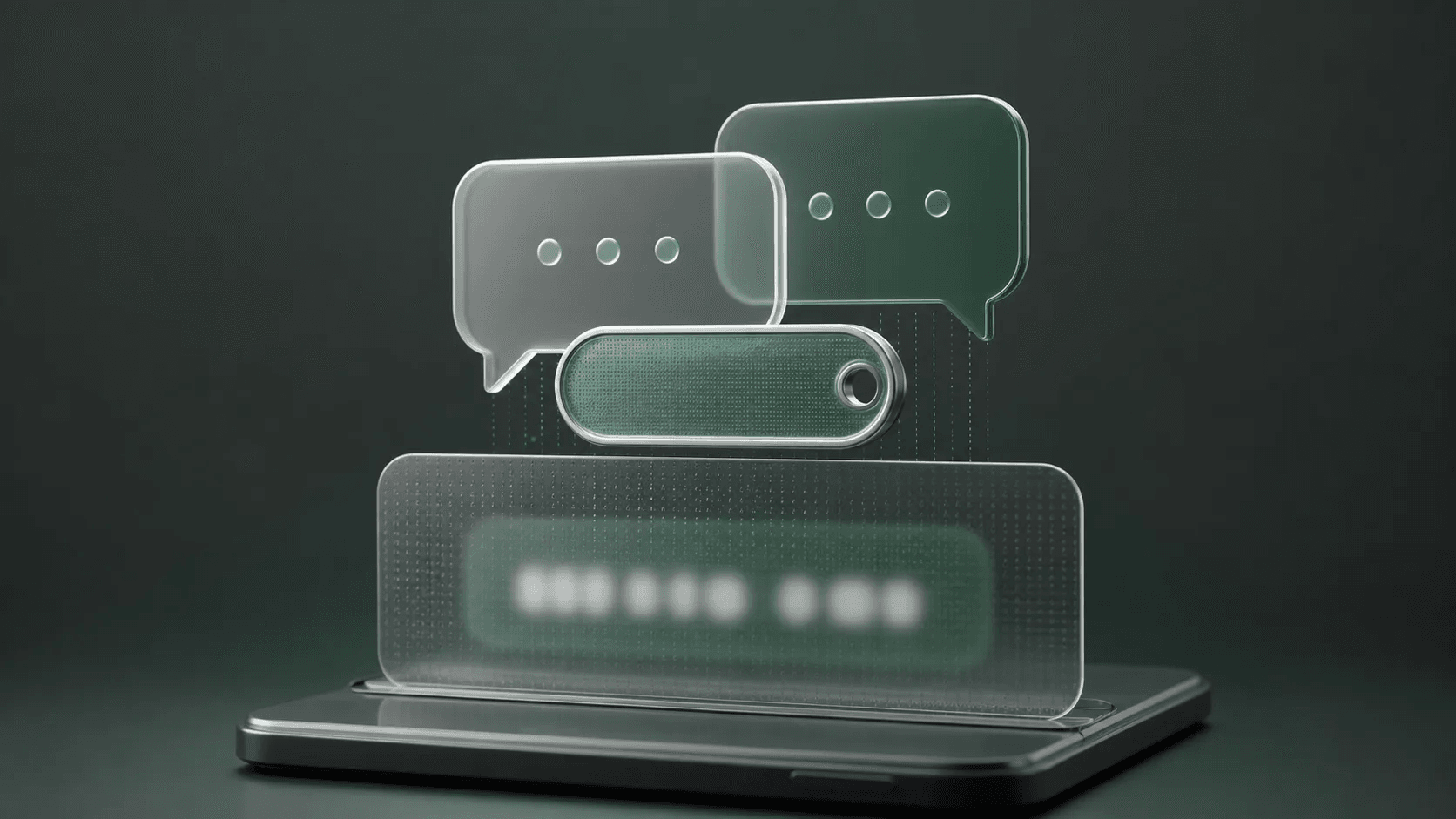
Messaging app usernames are useful only when they reduce phone-number exposure without becoming a new tracking handle. A username can let someone contact you without seeing your number, but it does not automatically remove the number from signup, recovery, contact discovery, metadata, or operator records. My rule for UmbrellaX is that usernames should be a deliberate contact layer. They should not be a decorative privacy feature placed on top of a phone-number-rooted account.
That is the answer first. Signal made usernames visible in the privacy conversation by letting people connect without sharing phone numbers. WhatsApp now documents usernames publicly in its Help Center. The search intent is clear: users want to know whether a handle finally fixes the phone-number problem in messaging apps.
My answer is yes, but only partly. A username is better than handing out a phone number. It is not the same as building a private identity model.
The answer first
Messaging app usernames improve privacy when they do four jobs.
First, they let a user share a contact handle instead of a phone number. Second, they reduce address-book dependence by giving people a deliberate way to connect. Third, they make identity more changeable because a handle can be rotated more easily than a telecom number. Fourth, they give the product a chance to design discovery with consent rather than bulk matching.
But usernames fail as privacy if the phone number still owns the account. If a messenger requires a number for signup, uses that number for recovery, lets others find accounts by number, or stores number-linked contact events, the username is only a front door. The house is still built on the telecom identifier.
This is why UmbrellaX starts from the deeper requirement: no phone-number account root. A username can be useful, but it should sit above keys, scoped contact exchange, and operator data minimization.
Why usernames became a real search topic
The old mainstream messenger pattern was simple: install the app, verify a phone number, upload contacts, and find people automatically. It was fast. It also made the phone number the center of identity.
That pattern is now under pressure. Signal’s username rollout made the privacy tradeoff easier for ordinary users to see. A person could connect without revealing a phone number to the other person. WhatsApp’s public username documentation shows the same user demand moving into much larger messenger markets.
The search results around usernames are not asking for a database field definition. People are asking practical questions: can strangers see my phone number, can people find me by number, can I choose a handle, can I change it, and does this make the app safer?
That is a useful direction. It means users are starting to notice that privacy begins before the encrypted message.
What a username actually fixes
A username can fix the sharing problem. If I meet someone at a conference, in a newsroom, in a legal matter, or in a support group, I may not want to give them a phone number. A handle is a narrower contact token.
A username can also fix some social friction. A person can separate work contacts from private contacts. They can avoid handing out a number that is tied to banks, delivery apps, SIM registration, old breach dumps, and family address books. They can change a handle after spam or harassment without asking a carrier for a new number.
That matters. I do not dismiss it.
For UmbrellaX, the practical value is deliberate contact exchange. A username, QR code, or one-time invite can create a relationship because two users chose it, not because the app vacuumed an address book and matched a telecom namespace.
That is the privacy improvement I want to preserve.
What a username does not fix
A username does not automatically fix account identity. If the service still requires a phone number to create or recover the account, the operator may still know the number. The user’s contact may not see it, but the product still imported it.
A username does not automatically fix contact discovery. If the app still encourages address-book upload, the social graph problem remains. The handle may be private at the user interface while the backend still learns who knows whom.
A username does not automatically fix metadata. The operator may still see registration events, lookup attempts, blocked users, recovery changes, linked devices, group joins, abuse reports, and timing patterns.
A username does not automatically fix anonymity. Handles can be reused across services, guessed, bought, squatted, scraped, leaked in screenshots, or correlated with writing style and profile photos.
This is the point I want users to keep: a username is a better contact surface than a phone number, but it is not a privacy architecture by itself.
The phone number behind the handle still matters
If the phone number remains the account root, the privacy problem has only moved one layer down.
A phone number is controlled by carriers. It can be connected to SIM registration, billing, recovery flows, data brokers, old contacts, number recycling, and account takeover attempts. NIST treats PSTN-based out-of-band authentication as restricted in digital identity guidance because the phone network is not a high-assurance identity layer. Princeton researchers have also documented risks from recycled phone numbers when old accounts still trust a reassigned number.
That is why I wrote a separate messenger without phone number guide. That page owns the deeper phone-number argument. This page owns the username layer.
The boundary is important. A username can help users stop sharing a number. A no-phone-number account model stops the product from making the number the private identity root in the first place.
UmbrellaX is built around the second goal.
Discovery is the real test
The hard question is not “does the app have usernames?” The hard question is “how does one person find another person?”
There are several models:
| Discovery model | Privacy posture | My test |
|---|---|---|
| Phone-number search | Weakest | Can a number become a lookup key? |
| Address-book matching | Convenient but sensitive | Does the app learn a relationship graph? |
| Public username search | Useful but enumerable | Can attackers guess or scrape handles? |
| Scoped username or invite | Stronger | Does the contact token expire, rotate, or limit context? |
| QR or one-time contact flow | Stronger | Did both users choose the connection? |
I prefer the last two for sensitive communication. Public usernames can be useful for broad reach, but private messengers need narrower flows too.
This is where contact discovery privacy becomes the internal link instead of repeating the whole topic. That article owns address-book upload, hashing limits, blind matching, and enumeration. Here the key point is simpler: username privacy depends on the discovery system around the username.
Enumeration turns usernames into a directory
A username system should not become a public phone book with nicer labels.
If an attacker can guess common handles, try millions of names, learn which ones exist, and connect those handles to profile photos or status signals, the system has created a discovery leak. The risk is not theoretical. Every public namespace attracts scraping, impersonation, squatting, and correlation.
My practical rule is that a private messenger username should have friction where friction protects users. Rate limits, extra disambiguators, scoped sharing, rotation, and non-public search defaults all matter. A product can still feel usable without making every handle globally searchable by default.
I would rather have a contact token that is slightly less elegant than a username directory that helps strangers map users.
For UmbrellaX, that means usernames should be one contact path, not the only one and not necessarily a universal public index.
Profile names and photos can undo the privacy gain
The handle is not the only identifier in the room.
A user may hide a phone number but keep the same profile photo used on LinkedIn, Instagram, a work website, or an old forum. They may reuse a handle from public social accounts. They may use a real name. They may join a group where the membership context identifies them anyway.
That is not the user’s fault alone. Product defaults train behavior. If a messenger presents usernames as “now you are private” while encouraging public profiles, permanent handles, rich previews, and searchable identity, the product has oversold the protection.
My rule for UmbrellaX is to make identity narrow by default. A profile should reveal only what the user means to reveal in that relationship. A handle for a public community and a handle for a lawyer, source, or private group should not have to be the same object.
Recovery can weaken the whole design
Recovery is where username privacy can quietly collapse.
If a user loses a device and recovery depends on SMS, the carrier is still in the control path. If support can restore access through weak identity checks, the username does not protect the account from takeover. If a cloud backup restores old sessions and messages after a phone-number event, the privacy model has failed somewhere else.
This is why encrypted chat backups matters as a related page. Account recovery and message-history recovery should not be the same power.
For usernames, my test is narrow: can the user regain account control without making a phone number the hidden authority? If the answer is no, the handle improved sharing but did not fix identity.
UmbrellaX should avoid that trap. I would rather make recovery more explicit than let a smooth SMS flow become the master key behind a private handle.
How I would design usernames in UmbrellaX
UmbrellaX is pre-launch, so I will not pretend that production behavior is already proven. What I can state is the design rule I am building toward.
A username should be optional, scoped, and replaceable. It should help someone reach you without learning your phone number. It should not reveal more profile data than the relationship needs. It should resist enumeration. It should work alongside QR codes, one-time invites, and direct key-based contact exchange. It should not be the recovery root. It should not force address-book upload. It should not become the operator’s excuse to store a larger identity graph.
That design accepts a tradeoff. Some discovery flows will be slower than “upload every contact and match everything.” I accept that. I would rather make the user choose the relationship than make the operator infer it.
My internal test is blunt: if a username feature gives strangers, spammers, or the operator an easier way to map people, it is not privacy work. It is growth work with privacy vocabulary.
What I would not trust
I would not trust a messenger that advertises usernames while still requiring a phone number, using address-book matching as the default, allowing number lookup, and treating recovery as an SMS event.
I would not trust a username system that has no rotation story. People make mistakes. Handles leak. Harassment happens. A private messenger should let a user change the exposure without rebuilding their whole life.
I would not trust a system that turns every username into a global search target by default. Public reach is useful for some people. It is dangerous for others. Private communication needs both public and narrow contact modes.
Most of all, I would not trust a product that confuses hiding the number from another user with removing the number from the product’s own trust model. Those are different claims. The second one is harder and more important.
My practical test for users
Before trusting a messenger username feature, I would ask:
- Is a phone number required to create the account?
- Can other people find me by phone number?
- Can I connect with someone without uploading contacts?
- Can I rotate or retire a username after abuse?
- Does username search reveal whether an account exists?
- Is recovery controlled by SMS, support, a cloud account, or user-held keys?
- Can I use different identity surfaces for different relationships?
- What does the operator store about lookups, invites, blocks, and profile changes?
Those questions are more useful than asking whether the feature exists. A username is only as private as the account, discovery, recovery, and retention model around it.
Bottom line
Messaging app usernames are a real improvement when they stop users from sharing phone numbers casually. Signal moved the mainstream privacy conversation in the right direction, and WhatsApp’s public username documentation shows that large messengers now see the same demand.
But a username is not the finish line. It can hide a number from another person while leaving the number inside the account model. It can make contact sharing cleaner while creating a searchable directory. It can reduce one kind of exposure while adding another handle to correlate.
For UmbrellaX, the stronger answer is layered: no phone-number account root, usernames as deliberate contact UX, optional scoped invites, encryption by default, secure groups, jurisdiction outside the Five Eyes, and operator data minimization. That is the privacy model I would trust. So that is the one I am building.
Sources
- Signal: Keep your phone number private with Signal usernames official
- Signal Support: Phone Number Privacy and Usernames official
- WhatsApp Help Center: About usernames official
- IETF RFC 6973: Privacy Considerations for Internet Protocols official
- NIST SP 800-63B-4: Authentication and Authenticator Management official
- Princeton University: Security and Privacy Risks of Number Recycling at Mobile Carriers research
- UmbrellaX privacy policy official